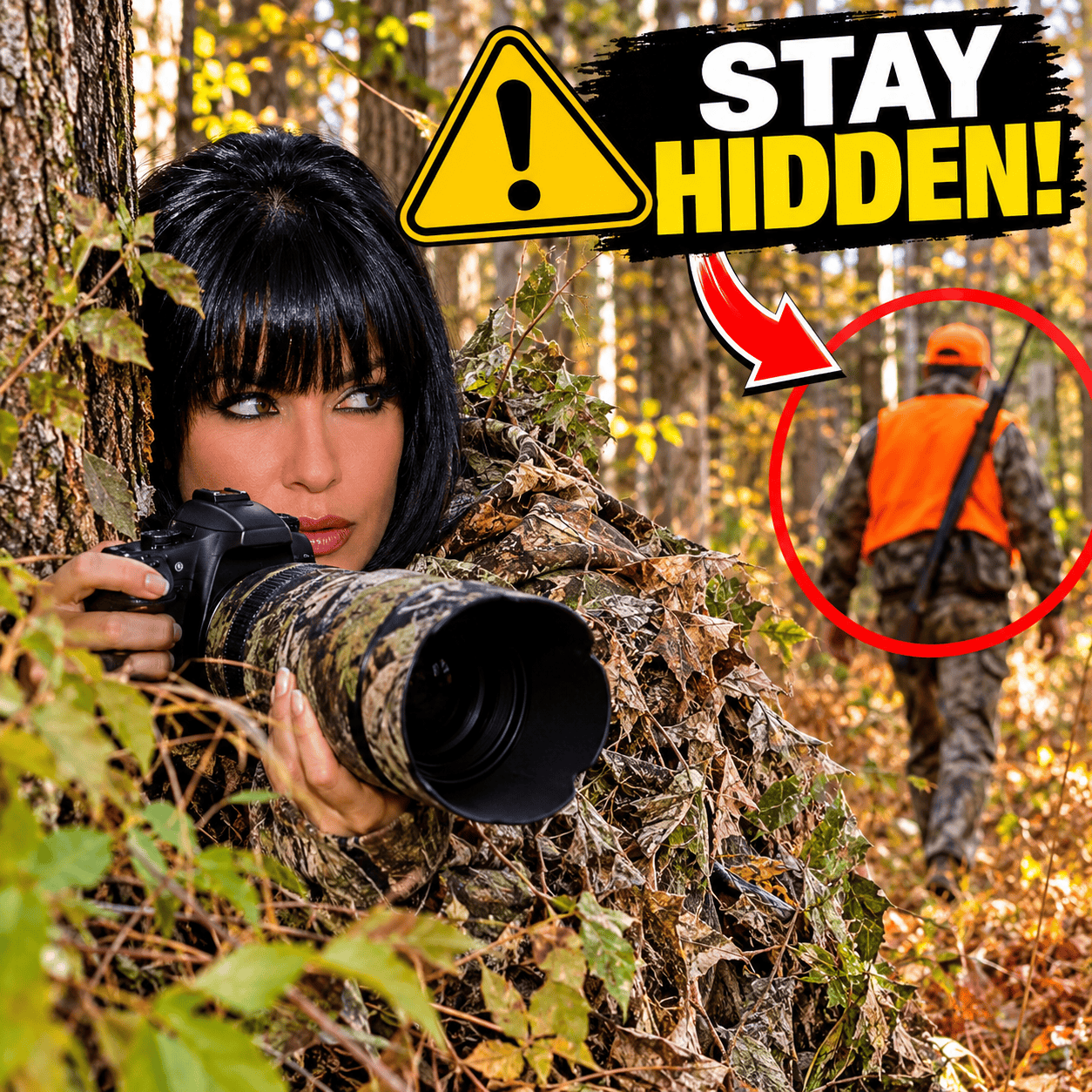
Your camouflage is doing its job, and that is the problem
A hunter can walk within twenty yards of your blind and never know you are inside. That may give you a clear view of wildlife, but during hunting season it leaves another person unaware of where you are.
You may have spent years learning to break up your outline and stay still. Those skills help with animals, and they also make you harder for people to spot, especially when you tuck into brush where hunters expect game to move.
Sharing the woods with hunters as a wildlife photographer starts with planning before you lift the camera. Find out who may be hunting the ground and where they are likely to be set up. Then look at your chosen spot from the direction they might approach.
You can see your orange vest when you zip it up, while someone coming from behind may see only a dark camera pack. Across a clearing, your camo hide may show no sign of a person at all.
Hunters are responsible for identifying what they shoot. You can reduce your exposure by choosing positions where people can recognize you early, even when that costs you a close frame. Start with what you wear, because your gear can hide more of it than you think.
Wear orange where people can see it
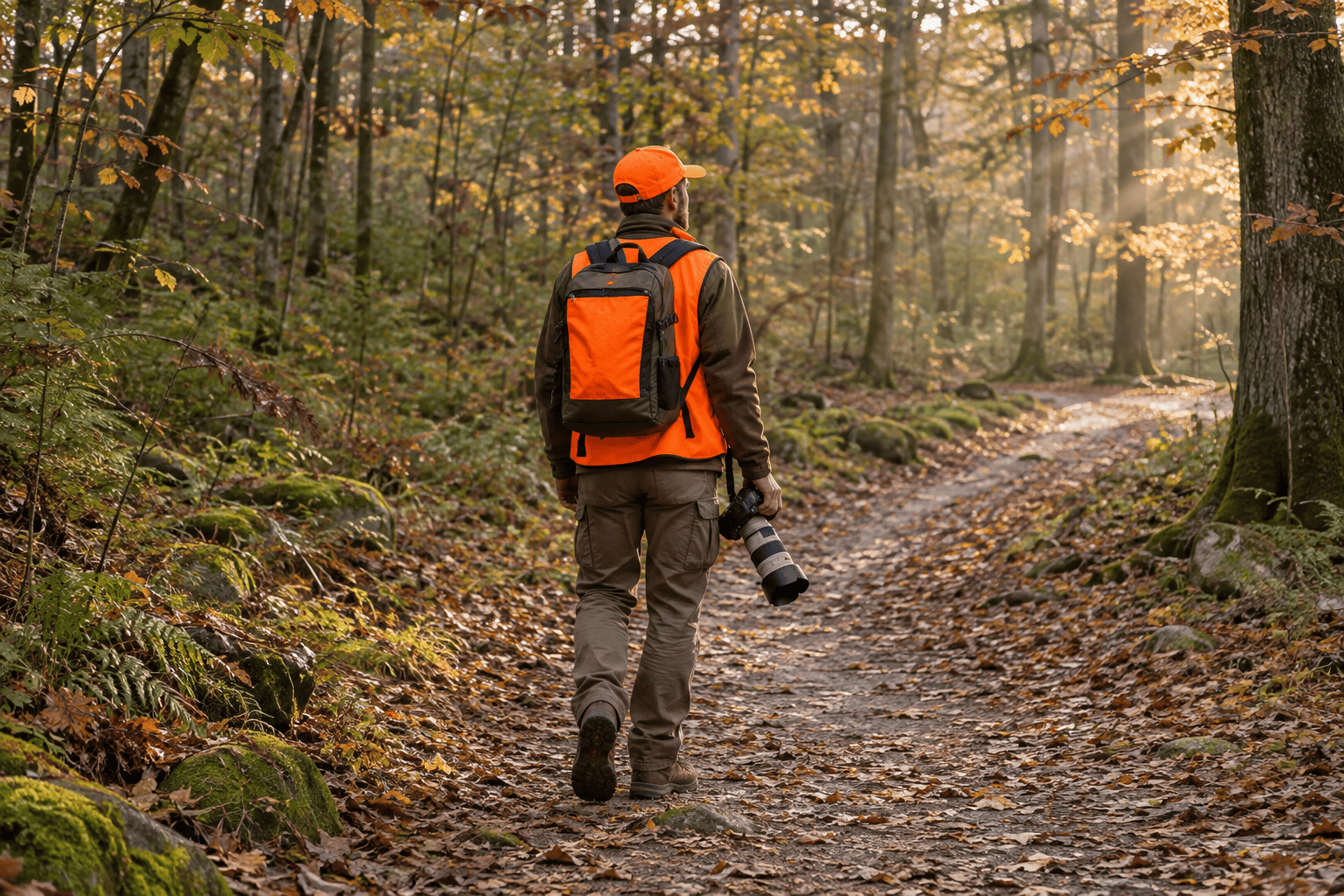
Wear a substantial area of fluorescent blaze orange during an active hunt, even when you are carrying a camera instead of a firearm. A proper vest and a visible hat give people more chances to pick you out through broken cover than a small patch tied to your pack.
Blaze orange is a signal people know to look for in hunting country. An ordinary bright jacket may blend into autumn leaves or look different in shade. Fluorescent orange needs enough clear surface to show, so check what happens when you shoulder your pack and raise a long lens.
Turn around before you leave the trailhead. If your pack hides the back of your vest, add a broad orange pack cover or panel. Check your outline while crouched, because a vest that shows when you stand can disappear behind a tripod or low brush.
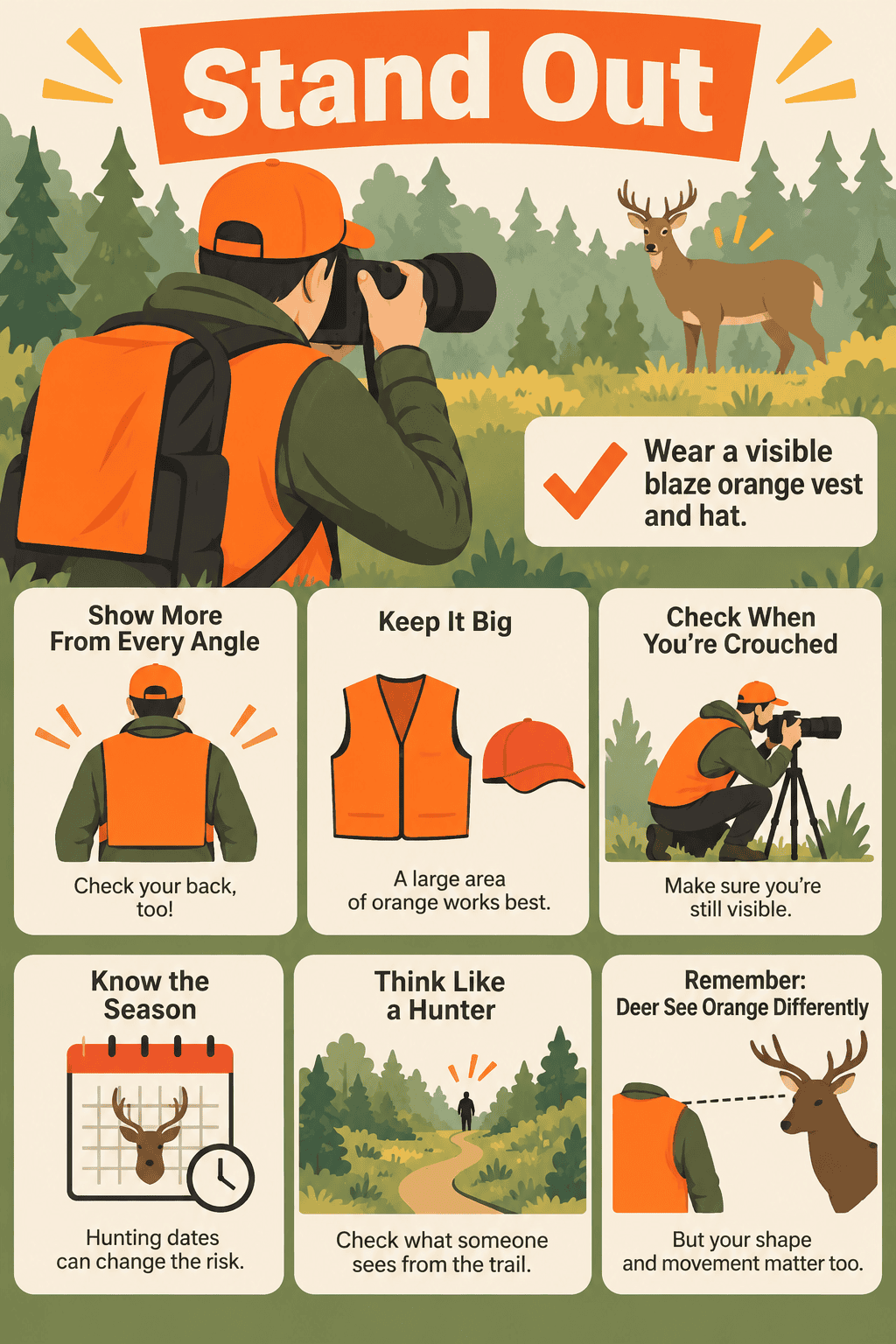
Deer see color differently from people, and orange may stand out to them less vividly than it does to you. They can still notice some orange against a background. Your shape and movement matter too, so keep the vest on and pay attention to where you sit and how slowly you move the camera.
You may find that deer carry on while you sit in orange and wait. A particular animal may stay well away, which gives you a reason to adjust your distance while keeping the clothing that helps a hunter spot you.
If your question is how to not get shot while photographing, think past the front of your vest. Check what a person would see from the trail behind you and from the far side of the opening. Then check the season calendar, because the hunt happening that day may change where you should sit.
Check the hunt happening here, today
Before you drive out, check the current wildlife agency calendar for the exact land you plan to enter. Look up the species and management unit, then check which hunting methods are allowed on your date. A quiet gap in one deer season can overlap with another hunt.
Read the rules for the land itself. A state wildlife area, national forest, county park, and private property can have different access terms. Some places limit entry during hunts, and some have rules about where you can set up a blind.
Make sure the place you intend to park and the path you intend to walk are open to you. Check the orange rule too, and read whom it covers. A rule written for hunters may address people accompanying them, while another may apply to everyone on the property.
Save the relevant page or take a screenshot before you lose service. If a boundary between units runs near your route, mark it on a map you can use offline. You should know which side you are on while you are standing there with a pack.
At the gate, look for other vehicles and read any fresh notices. A truck at a remote pullout tells you someone may already be walking in or sitting nearby, though it cannot tell you exactly where. Give yourself time to change plans before carrying a blind deep into the area.
Season dates tell you who is allowed to hunt. Vehicles and people on the ground give you a better sense of who is there now, and a short conversation can help you find room for your camera.
Tell hunters you are photographing, then discuss space
When you meet a hunter on a trail, stop where you are plainly visible and speak in a normal voice. You can say, “Hi, I’m here to photograph wildlife. I’m thinking of working farther up this trail. Is someone set up that way?” Give them room to answer without asking for a detailed account of their hunt.
If they tell you a party is nearby, ask which direction lets you give them space. If your plan puts you close to their position, choose another place. You both need a clear sense of where the other person will be moving.
If you are wondering how to let hunters know you’re just photographing, a marked photography vest can help identify you to hunters who are close enough to read it. Clear lettering on the front and back works best when someone has an open view of you, such as on a trail.
Keep the blaze orange visible around any words or patches. Lettering disappears behind branches, and words on the front cannot help someone approaching from behind. Make yourself easy to spot as a person, then use the lettering to help start a conversation.
You can also say what you plan to do: “I’ll stay on the main trail and head back before the light goes.” Say this only if you can keep to it. A hunter who expects you on the trail should be able to count on that.
If someone asks you to move from public land where you are allowed to be, listen to the safety concern and decide where you can work with less risk. You can be courteous while making your own decision. A move of a few hundred yards may solve the problem, and on some days the whole area will feel too crowded for the photographs you came to make.
That judgment gets harder once you have carried in a hide and set it up. Question the location before its walls conceal you from everyone else.
Choose a blind site away from hunters
Keep a blind away from an occupied hunting spot. If you can see a hunter already set up, hear a party working through cover, or find that your intended position sits beside their approach, move. A camo blind can leave them unaware that a person is close to the ground they are watching.
Be wary of a spot that looks ideal because animals funnel through it and a hunter can reach it easily from a gate. A narrow crossing or the edge of a small opening may be exactly where someone plans to hunt. Your long lens gives you more choices than that single close position.
Think through the approach as carefully as the final frame. You could enter along a trail in orange, then disappear inside a blind facing that same trail. Ask whether someone arriving later could spot the blind and understand that it is occupied.
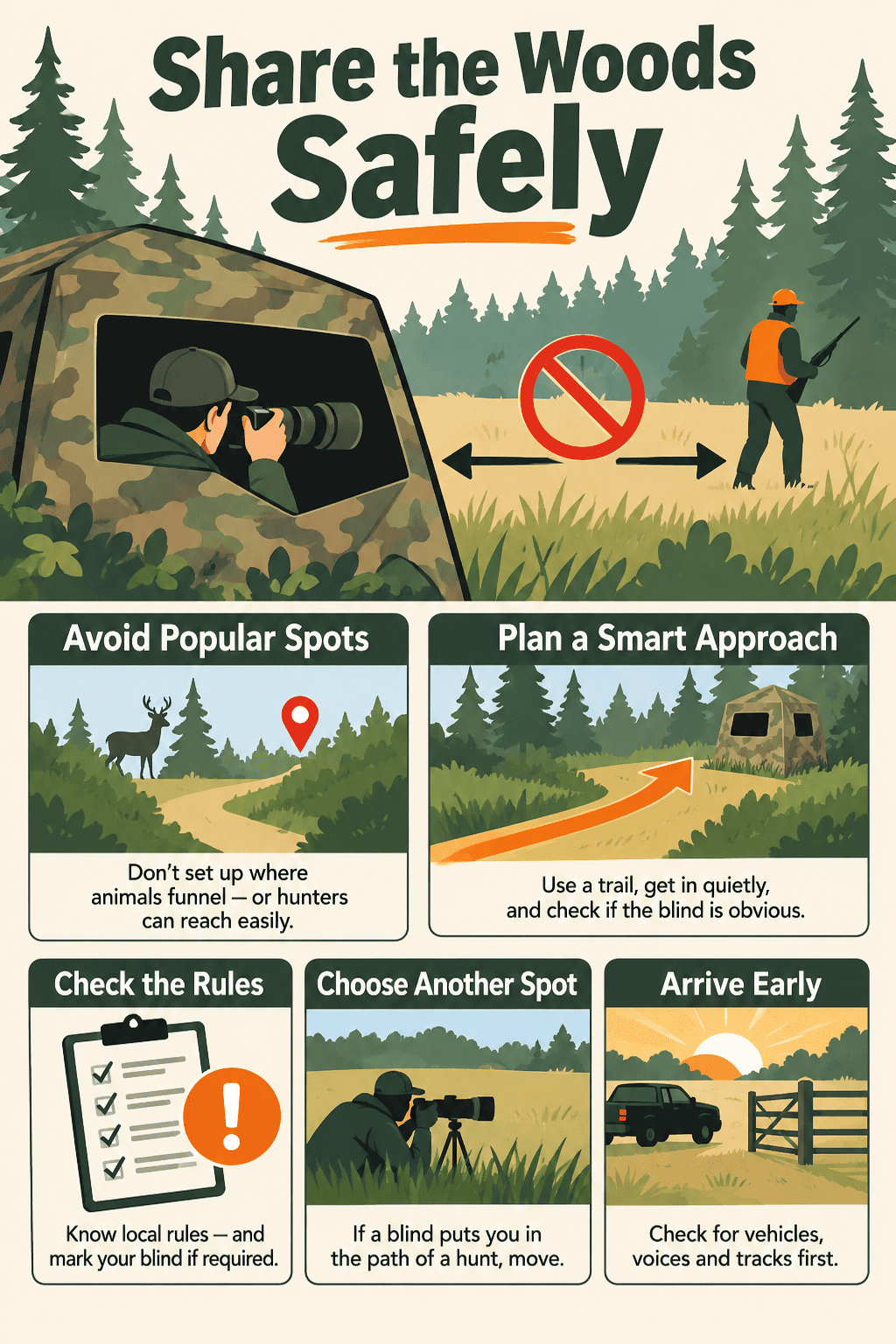
Check local rules before setting out a ground blind, including any rules for marking one or leaving it in place. Rules written for hunting blinds may apply differently to a photographer’s hide, so verify the wording for your activity and the property you will use. Follow any marking requirement, and add visible orange outside where it is allowed and useful.
If a blind puts you in the path of an active hunt, take it elsewhere. You can work from a more open position or use a longer working distance. The frame may be wider, and someone approaching will have a better chance of recognizing you.
At first light, leave time to look at the ground before building your setup. Fresh vehicles at the gate or voices ahead should prompt another check of your route. If a hunter arrives after you, make your presence known from a safe distance and discuss how you can separate.
Sometimes the close image you want depends on a spot you should leave alone. A different position can still give you a worthwhile photograph, so it helps to decide what else you could make before you head out.
When the safest shot is a different photograph
If your plan calls for stalking deer or elk through an area where hunters are already working, change the plan. Move to a permitted place with less hunting pressure, or set up where your longer lens can do the work. You can still watch an animal’s behavior without closing the last stretch through cover. Another option is finding a local bird-club outing; check access and hunting conditions for its location before you go.
Trails offer their own choice. If you are photographing smaller wildlife near a well-used route, stay visible to people coming around a bend and check that your pack leaves your orange in view. If the trail runs toward occupied ground, turn back and use another route. You can return when the hunt is over.
A different photograph may show a deer small in its habitat or an animal crossing an open slope. Give it enough room to carry on with what it was doing. That patience often gives you behavior worth photographing, even when you get fewer close portraits.
Before each trip, check the current hunt and land rules, then wear orange that stays visible with your gear on. Find out where others are set up and choose a camera position you can explain to someone arriving from the other direction. If your position depends on remaining unseen by people, keep walking.